Essay III
The Theology of Blisters
The hot tender spot the shovel or the maul raises before you've noticed—the body's honest receipt for unfamiliar work.
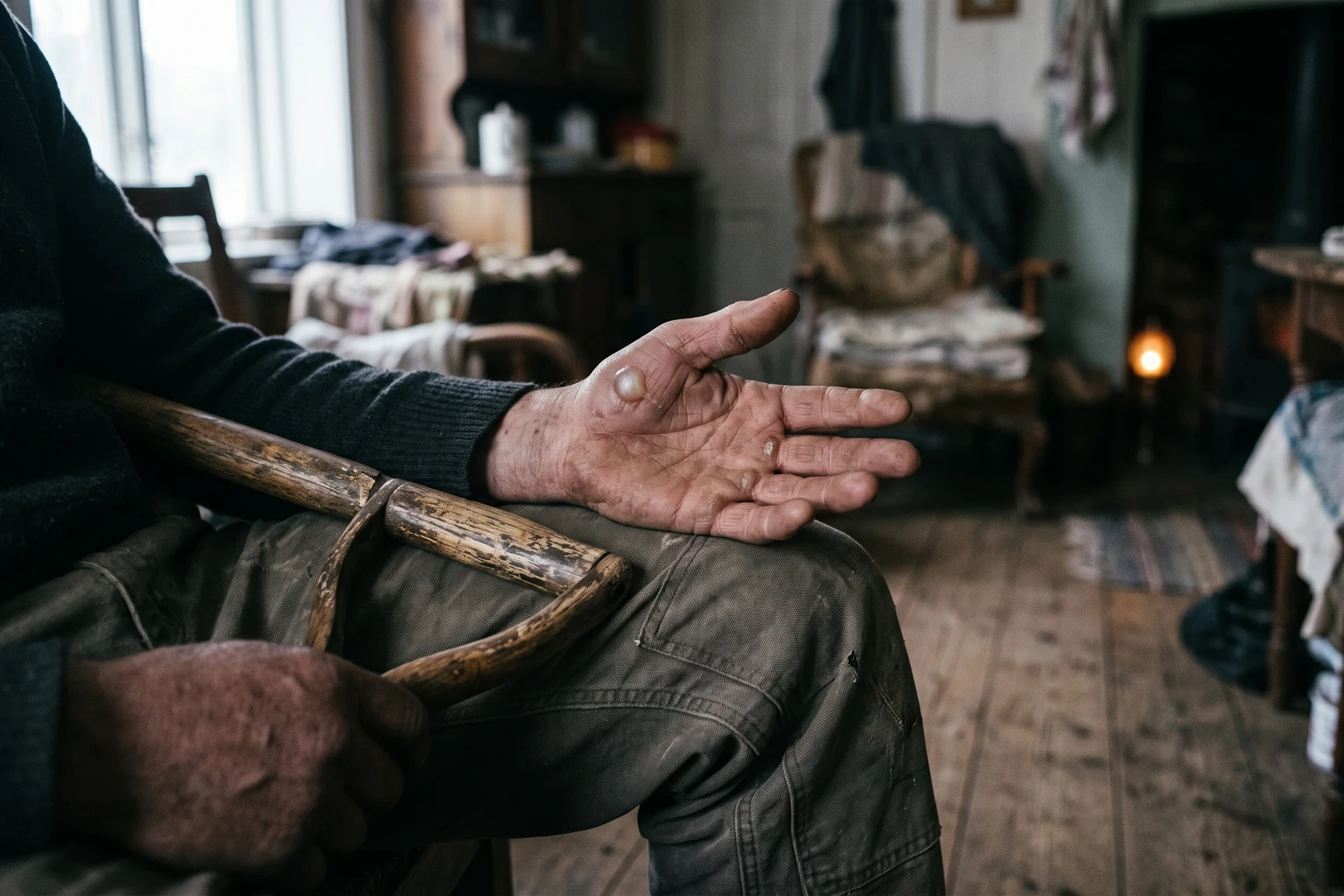
The blister arrives without invitation. A small heat at first, barely worth noticing. Maybe you’ve been at the shovel all morning, breaking ground for potatoes. Maybe it’s the unfamiliar weight of a splitting maul. The body knows before you do. That tender spot where the handle meets the meat of your palm—it’s already begun its slow work of documentation.
This is how protection works: always late, never preemptive. The body doesn’t anticipate; it responds. First the hot spot, then the fluid dome, then—if you keep at it—the inevitable breaking. Raw skin exposed to air. Not pleasant, this minor surgery you perform on yourself. But necessary. The way forward always seems to require this backwards motion through injury.
A blister is the body’s honest sacrament. Not the sort that leaves you cleansed. More like the stigmata, if the stigmata arrived not as miracle but as consequence. Evidence of contact. The gardener’s palm, the rower’s heel, the guitarist’s fingertips—all bearing witness to this old theology. The world presses in, and the flesh answers.
There’s no efficiency to this system. The perfect design, you’d think, would grow the callus in advance. Skip the tender vulnerability. But that’s not how bodies work. We earn our armor through repetition, pay for it in discomfort, keep it only so long as the work continues. Stop digging, stop rowing, stop pressing strings, and the callus fades. Capacity dissolving back into softness.
The lifecycle reads like liturgy. Hot spot. Fluid sac. Rupture. The slow, patient work of new skin growing beneath dead skin. And finally—if the friction persists—the hardening. Not scar tissue, exactly. More like memory made flesh. A thickening at the exact coordinates where you and the world refuse to give way to each other.
I knew a mechanic once, hands like leather maps. Every ridge and pad told its story. The thick callus at the base of his thumb from years of wrenches. The hardened strip across his palm from gripping steel. These weren’t flaws or deformities. They were the body’s cartography, drawn in the language of use. You could read his working life in those formations. The antithesis of the curated profile; the unedited truth of what he’d carried.
Meanwhile, the office worker pays gym fees for simulated hardship. Posts his weekend blisters like merit badges—proof that friction still finds him somewhere. There’s something desperate in this, something lost. We’ve engineered away the small wounds. Gel-padded gloves, ergonomic handles, shoes molded to the foot before the first step. And what have we gained? Hands soft as bread dough. Spirits that blister at the first rough word.
The thing is, though, comfort is always the enemy of capacity. A hand kept safe from all friction is a hand that cannot grip, cannot hold, cannot endure. The body, denied its liturgy of resistance, forgets what it once knew. The world doesn’t grow lighter; we grow weaker. The old paradox: what you shield yourself from, you become unfit to bear.
Consider the guitarist’s fingertips. Those calluses aren’t deadening; they’re focusing. The hardened skin allows for greater pressure, faster movement, sustained contact with the strings. Protection that enables deeper feeling, not less. The body’s way of making the music part of itself. Eventually the instrument doesn’t feel like a tool in your hands but an extension of them.
This is what the modern world doesn’t understand. We treat friction as failure, something to optimize away. But the callus cannot be bought, cannot be downloaded, cannot be hacked. It’s earned in the currency of time and repetition. The comfort you seek by avoiding the first day’s labor makes you incapable of the last day’s work.
Sometimes I watch my own hands at work. The small callus forming where the garden spade meets my palm. The tough spot on my index finger from years of holding a pen wrong. These minor monuments to stubbornness. The body keeps its own records, maintains its own theology. Every callus a small rebellion against the fantasy of frictionless living.
There’s a peculiar beauty to healing blisters. That moment when the fluid dome gives way to peeling skin, the rawness beneath slowly toughening. It’s alchemy of a sort—transformation under pressure. What was wound becomes shield. What was vulnerable becomes capable. The process won’t be rushed. You’re forced to wait, to favor the other hand, to respect the wound’s demand for patience.
In this waiting, wisdom. The body teaching what the mind resists: that adaptation is slow, that protection comes only after injury, that capacity must be rebuilt each generation. You cannot inherit another’s calluses. Only the memory of their work. The blacksmith’s grip, the seamstress’s needle-pricked thumb, the laborer’s hardened heel—these aren’t gifts but evidence of practice.
The modern blisters have migrated inward. Psychological tenderness at every slight friction. Anxieties that never callus over because we retreat from the very thing that would toughen the soul. We’ve not eliminated friction; we’ve just shifted its location. From palm to psyche. From skin to spirit.
But the old theology remains available. The handle still fits the hand. The friction still teaches. The body still remembers how to build its armor, one thin layer at a time. Not through comfort but through contact. Not through ease but through endurance.
You are not here to transcend the world. You are here to learn how to carry it. The blister and its offspring, the callus, keep trying to teach this. They’re proof your body hasn’t given up on you yet. Still willing to adapt, to respond, to meet the world where it presses in.
The protection will come. Always late, never preemptive. First the wound, then the armor. First the breaking, then the building. This is what happens when you stay with the work. The skin thickens where it needs to. Exactly where it needs to. A map of your days, written in the language of friction and time.
No shortcuts. No optimization. Just the slow accumulation of capacity through repeated contact with what resists you. The handle returns to the same spot in your palm. The friction repeats. The skin remembers.
This is the theology of blisters: not transcendence but endurance. Not avoiding the wound but learning from it. Building your own armor through the patient repetition of necessary work. The world presses in. You press back. Both of you are changed by the contact.
The callus fades if you stop. It always fades if you stop. But while you’re working, while you’re carrying, while you’re staying with the weight—it holds. Your own body’s testament to what you’ve been willing to bear.
MEDIUM (Instagram/LinkedIn)
The blister arrives uninvited. A small heat where the shovel handle meets your palm. The body’s documentation of contact—marking the spot where you and the world refuse to give way to each other.
This is how protection works: always late, never preemptive. First the wound, then the armor. The perfect system would grow the callus in advance, skip the tender vulnerability. But bodies don’t optimize. They respond. They remember.
A mechanic’s hands tell the truth. Every ridge and callus a record of repetition. The thick pad at the base of the thumb from years of wrenches. The hardened strip across the palm from gripping steel. Not flaws but cartography. The unedited story of what he’s carried.
Meanwhile, soft hands pay gym fees for simulated friction. Weekend blisters posted like merit badges. We’ve engineered away the small wounds—gel-padded gloves, ergonomic everything. And gained what? Hands that cannot grip. Spirits that blister at the first rough word.
Comfort is always the enemy of capacity. What you shield yourself from, you become unfit to bear. The callus cannot be bought or borrowed. Only earned through time and repetition. The protection comes, but only after the injury. The strength builds, but only through the friction.
The old theology remains available. Your body still remembers how to build its armor, one thin layer at a time. Not through comfort but through contact. The world presses in. You press back. Both changed by the meeting.
SHORT (Twitter/X)
The blister teaches what comfort won’t: protection only comes after injury. Your grandfather’s hands knew this. Every callus a small monument to staying with the work.
Word, when there is word.