Essay XVIII
Ruins Built on Purpose
A ruin built on purpose—a tower crumbled by design in a rich man's park—and what it means to counterfeit the passage of time.
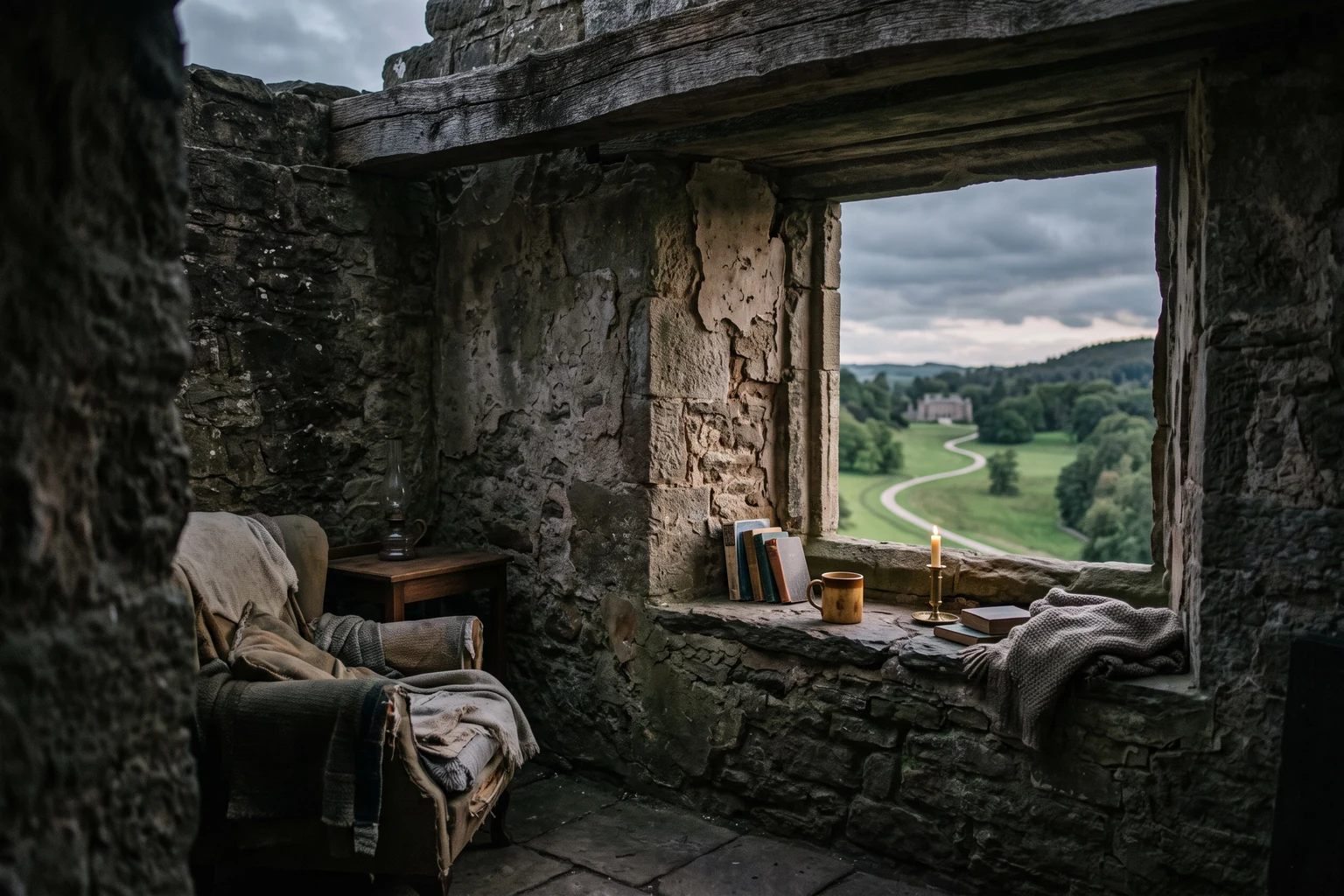
On the grounds of certain old estates you come across a strange thing: a ruin that was never anything but a ruin. A broken tower on a hill, artfully crumbled, half its battlements missing, ivy encouraged up its flanks — built that way, deliberately, in the eighteenth century, by a landowner who wanted a picturesque object to draw the eye from the drawing-room window. A folly, they call it. A sham ruin. A building constructed already old, already fallen, its decay not the work of time but the intention of the architect, who was paid to make a new thing look ancient and defeated.
It is easy to sneer at them, and people did — vanity, they said, the idle rich playing at melancholy, spending real money to counterfeit the ravages of centuries because genuine antiquity was one thing their new fortunes couldn’t buy. And there is something to that. But I find I can’t quite sneer. There is a peculiar honesty in a building that admits, from its first stone, that ruin is where all building ends. The great house beside it pretends to permanence, presents its unbroken face to the world, insists it will stand forever. The folly on the hill has skipped to the last chapter and made its peace with it. It says: this is what becomes of towers. Let us have the view of it now.
And then there are the true ruins, which the follies were only imitating — the real broken abbeys and roofless castles and tumbled walls that the centuries actually made, and which we visit in our thousands, and photograph, and love. That is the odd thing to sit with: we find a ruin more moving than the building ever was whole. A cathedral entire is impressive. A cathedral open to the sky, its pillars standing in the grass, its great window empty of glass and full of clouds, is something more — it stops the breath in a way the finished building did not. The decay adds rather than subtracts. Time, doing its slow demolition, turns out to be a collaborator, softening the hard geometry, letting the grass and the jackdaws in, making of the proud complete thing a humbler and more beautiful incomplete one.
I think we respond to ruins because they are the truth the whole building was hiding. Everything made by hands is on its way to this — the roof will go, the walls will come down, the grass will come up through the floor, given only enough time, and there is not a structure standing anywhere that is exempt. The ruin is not a failure of the building. It is the building’s destination, arrived at, made visible. And there is a strange comfort in seeing it, in standing among the fallen stones of something that took a thousand men and fifty years to raise and is now a lovely open shell where sheep shelter — comfort, because it puts our own small impermanence in company. We are not the only things that end. Even the cathedral ends. Even the mountain, given the geologist’s kind of time, ends.
The folly-builders knew this, in their idle picturesque way, better than the men who raised the great houses. They built the ending into the beginning. They set a fallen tower on the hill and looked at it over their dinner, a little melancholy, a little wise, keeping the last chapter in view from the first — which is more than most of us manage, hurrying to build our own complete and permanent-seeming things, keeping the ruin they will become carefully out of frame.
Word, when there is word.