Essay XXII
What Will Outlast Us
A plastic fork used for eight minutes that will outlast you, your children, and theirs—the strange immortality of our most disposable things.
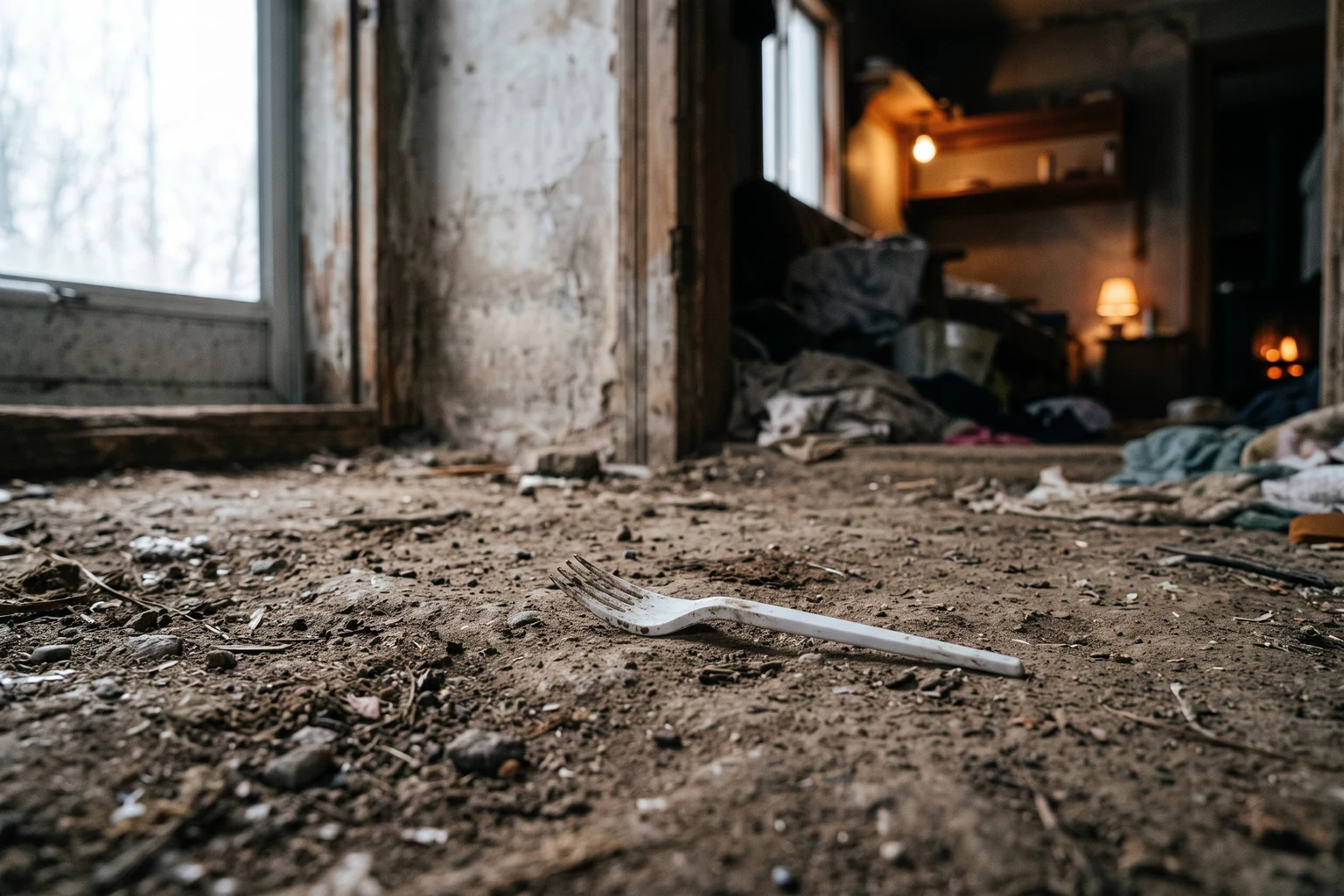
Take a plastic fork. The kind that comes with a takeaway, used for eight minutes and thrown away without a thought. That fork, in a landfill, will outlast you. It will outlast your children. It will very likely still be a recognisable fork, brittle and yellowed but structurally a fork, in four or five hundred years, when everyone who ever touched it is long forgotten and the language they spoke has changed past understanding. We made a thing to be disposable and accidentally made it nearly eternal. It is one of the small deranging facts of the age, that our most careless objects are often our most durable.
I like to think about the actual half-lives of the things around me — not the poetic lifespan but the physical one, how long the stuff would really persist. The cotton shirt: a few decades in the ground, then gone to nothing. The oak table: a century or two if kept dry, far less if not. The photograph, a real printed one, silver on paper: it fades, slowly, browning and softening over a hundred years, but it fades gracefully, legibly, and a print in a shoebox can still be looked at by a great-grandchild who never met the face in it. The plastic, the glass, the fired ceramic: these last and last, indifferent, long past any use or memory.
And then the digital, which we imagine is the most permanent thing of all, and which is in truth the most fragile. A photograph on a hard drive is not safe. It is a pattern of charges on a spinning platter or in a chip, and the drive will fail — they all fail, mechanically, in years, not centuries — and the format will fall out of use, and the software that reads it will stop being made, and the account it was stored in will lapse when a payment stops or a company folds. We have taken more images in the last twenty years than in all of prior history combined, and it is entirely possible that almost none of them will survive a hundred, that this will be a strangely blank era to those looking back, a time that photographed everything and preserved nothing, its billions of pictures gone with the servers that held them, while a faded print from a century before survives in a drawer because it was a physical thing that asked for nothing to keep existing.
That is the reversal that fascinates me. We think of permanence as a matter of importance — surely the things that matter will be kept. But persistence has nothing to do with importance. It has to do with material, and with whether a thing needs continuous care and power and format-support to go on being itself, or whether it just sits there, inert, requiring nothing. The plastic fork requires nothing, and so it endures. The precious photograph requires a whole fragile scaffolding of technology to remain visible, and so it is at constant risk. The most trivial objects we make are the most likely to be here in five hundred years; the ones we most want to keep are the ones most likely to quietly vanish.
I don’t draw a tidy moral from it. I only find it worth holding in the mind — that we are surrounded by two populations of things, the durable-trivial and the precious-fragile, and we tend to get which is which exactly backwards. Somewhere our worst rubbish is settling in for a stay of centuries. Somewhere the images and words we most meant to keep are sitting on media already beginning, silently, to fail. What survives us will not be what we chose. It will be what happened not to need us in order to last.
Word, when there is word.