Essay XXV
The Gravity of a Full Kettle
A full kettle heavy on the wrist, the long climb to the boil, and the small daily surrender of waiting for water that will not be hurried.
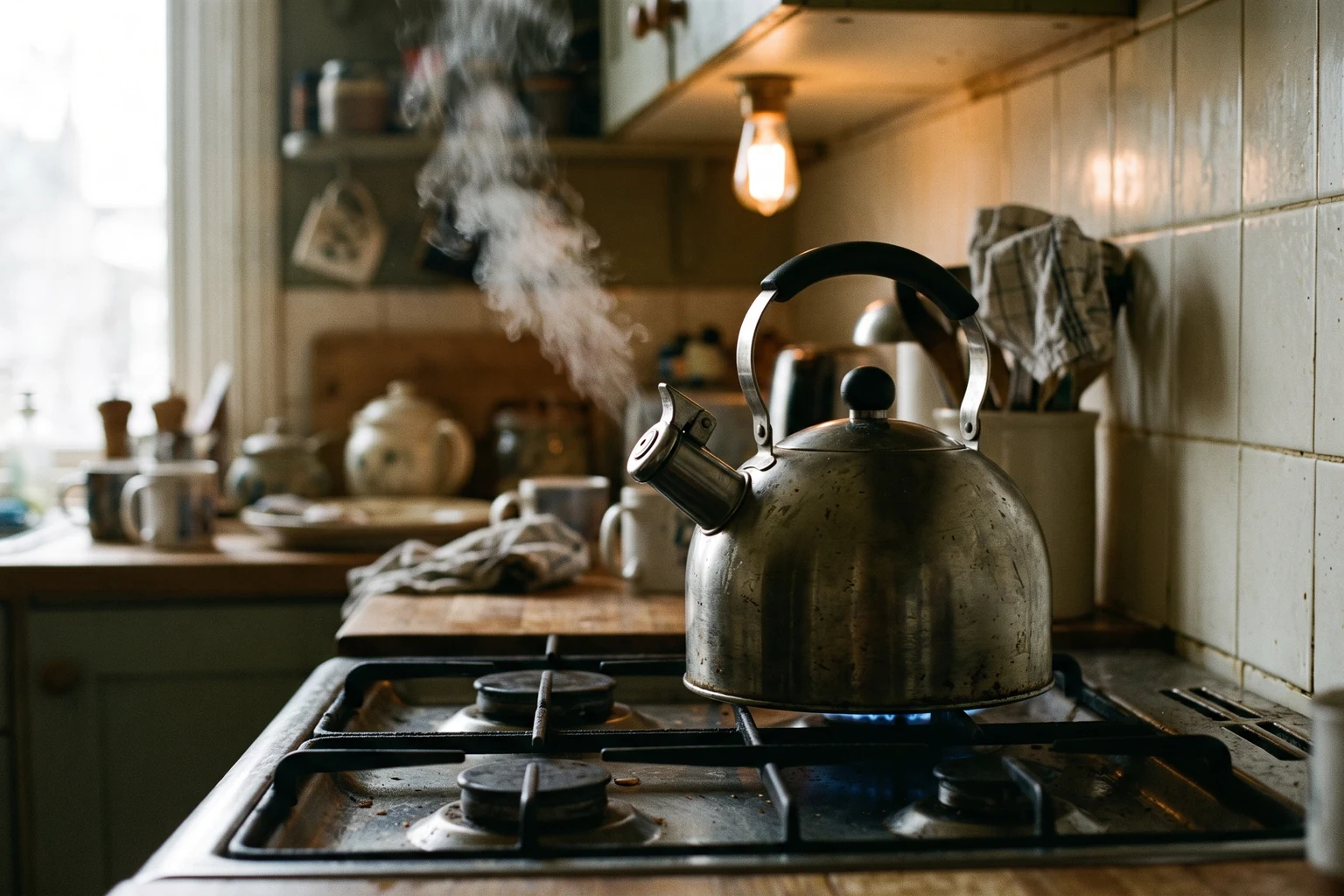
The kettle sits on the hob, heavy with water. Not the careful measure of a single cup, not the efficient half-fill—full. You feel it when you lift it from the tap, the way it pulls at your wrist, demands a shift in your stance. This weight isn’t metaphorical. It’s eight pounds of water in a cast iron vessel, or five in stainless steel. Your body knows the difference before your mind does.
You set it down with a thud that speaks of mass meeting surface. Click the gas on, or turn the electric coil. Then the waiting starts.
Four minutes. Maybe five. Not an eternity, but these days it might as well be. We’ve forgotten how to wait without filling the gap. The phone comes out before you’ve even thought about it. The scroll begins. But the kettle won’t be hurried. Takes as long as it takes. The laws of thermodynamics don’t care about your schedule.
This isn’t mindfulness, exactly. You haven’t chosen to be present. You’ve been placed here by physics. Water boils at a hundred degrees, not a moment sooner. Every degree between cold and boiling must be passed through. No shortcuts. There’s something honest in that—maybe the first honest thing you’ll encounter all day.
The hum builds from the base. A vibration that travels through metal, through the counter, into your hand if you touch the handle too soon. This is friction made audible. Heat meeting water, molecule by molecule. First a tick, then a murmur, then something like a gathering argument. You can hear the resistance, the water’s reluctance to change state. It sounds like work. Because it is work. Energy meeting mass, insisting on transformation.
Then the first whisper of steam.
A faint plume from the spout, almost apologetic. This moment—more than the whistle, more than the rolling boil—this is when anticipation peaks. We live in a world of progress bars and download percentages, abstract promises written in code. But steam you can see. Feel on your skin if you lean close. A covenant written in condensation. The physical world keeping its word.
My grandmother’s kettle was copper-bottomed, blackened from forty years on a turf stove. She’d fill it after dinner, set it on the range, and we’d wait. No one called it meditation. It was just what happened while water heated. The rosary might come out, or the darning, or nothing at all. Just the sound of the kettle’s slow argument with itself, the occasional pop of the fire, the rain against the window. Nobody was practicing presence. We were just present, because the water wasn’t ready yet.
The boil, when it comes, is violent. The kettle doesn’t just get hot; it rages. Water churning against metal, trying to escape itself. We’re told to seek calm, to smooth our rough edges. But transformation isn’t peaceful. The water must roil to become what’s needed—the medium for tea, for coffee, for the hot water bottle that’ll warm your bed. That chaos isn’t a failure of composure. It’s the sound of a thing becoming useful.
Your kettle carries its history in mineral deposits, in the wear pattern on the handle, in the particular way the lid sits slightly askew. This isn’t symbolism. It’s the physical record of every previous boiling, every morning’s tea, every late-night cup. When you wait for it now, you’re not having a unique experience. You’re participating in the ten-thousandth iteration of the same simple ritual. Adding your own mineral deposit, your own microscopic wear to the handle.
The electric ones click off now, polite and efficient. The old whistling sort scream until you lift them. Either way, the transformation’s complete. You pour, and already the cooling begins. The metal pings as it contracts. The steam dissipates. The heat spreads into the room—not lost, just redistributed. This is the forgotten half of the process: the return to stillness. The kettle becomes heavy and inert again, waiting for the next round.
Might be that this is what we’ve lost: the ability to wait for things that won’t be optimized. The phone promises instant everything. The apps promise efficiency. Life promises to move at the speed of thought. But the kettle refuses. Four minutes because that’s what water needs. Not because it’s good for you, not because waiting builds character. Just because that’s how long it takes.
There’s a friction here between what you want—immediate hot water—and what the world offers—a process with its own timeline. You learn to live with that friction or you drink cold tea. Most of us have learned to live with it, though we don’t talk about it that way. We say “the kettle’s on” like it’s a simple fact, not a small surrender to the world’s terms.
Sometimes the element burns out. Sometimes you forget to fill it and stand there wondering at the silence. The interruption’s more jarring than you’d expect, this small ritual denied. You fix it, or you adapt. You carry on. The kettle doesn’t offer transcendence. It offers something more useful: the weight of being here, now, in this kitchen, with this body, carrying this water from cold to hot and back to cold again.
This morning, filling the kettle, I felt the full weight of it pull at my wrist. Set it on the hob. Turned the gas on. And waited. Not practicing patience—being schooled by it. The kettle’s gravity isn’t just the water’s mass. It’s the weight of a moment that can’t be skipped, a transformation that can’t be rushed, a small surrender to the world as it actually is.
The water boils. You pour. The kettle cools. Tomorrow you’ll do it again.
This is what carrying the world looks like: one kettle at a time, one boil at a time, one necessary wait at a time. The gravity of it accumulates—all those mornings, all those kettles, all those small surrenders to thermodynamics. Until waiting for water to boil becomes a kind of prayer. Not prayer to anything. Just prayer as the shape of attention paid to what’s actually happening.
The kettle’s heavy when it’s full. That’s the first lesson. The last lesson’s the same.
MEDIUM (Instagram/LinkedIn: 150-250 words)
The kettle sits heavy on the hob. Full, not half-measured for efficiency. Eight pounds of water in cast iron. You feel it in your wrist when you lift it.
Four minutes to boil. These days, that’s an eternity. The phone comes out before you’ve even thought about it. But the kettle won’t be hurried. Water boils at a hundred degrees, not a moment sooner. Every degree between cold and boiling must be passed through. The laws of thermodynamics don’t care about your timeline.
First comes the hum. Heat meeting water, molecule by molecule. Then that first whisper of steam—not the conclusion, but the promise being kept. We live in a world of progress bars and loading screens. The steam you can see, feel on your skin. A covenant written in condensation.
The boil arrives violent, necessary. Water churning against metal. Transformation isn’t peaceful. To become useful—the medium for tea, for life—the water must roil.
My grandmother’s kettle was copper-bottomed, blackened from forty years on a turf stove. Nobody called it meditation. It was just what happened while water heated.
The kettle doesn’t offer transcendence. It offers the weight of being here, in this kitchen, with this body. Learning that some things can’t be optimized. That waiting isn’t empty time—it’s the shape of attention paid to what’s actually happening.
SHORT (Twitter/X: 150-240 characters)
The kettle takes four minutes to boil. You’ve forgotten how to wait that long without filling the gap. But water won’t be hurried. Every degree between cold and boiling must be passed through. No shortcuts in thermodynamics.
Word, when there is word.