Essay XXVIII
The Maze and the Labyrinth
A maze is built to confuse; a labyrinth has one path that only looks like it doesn't. On the difference between being lost and being led.
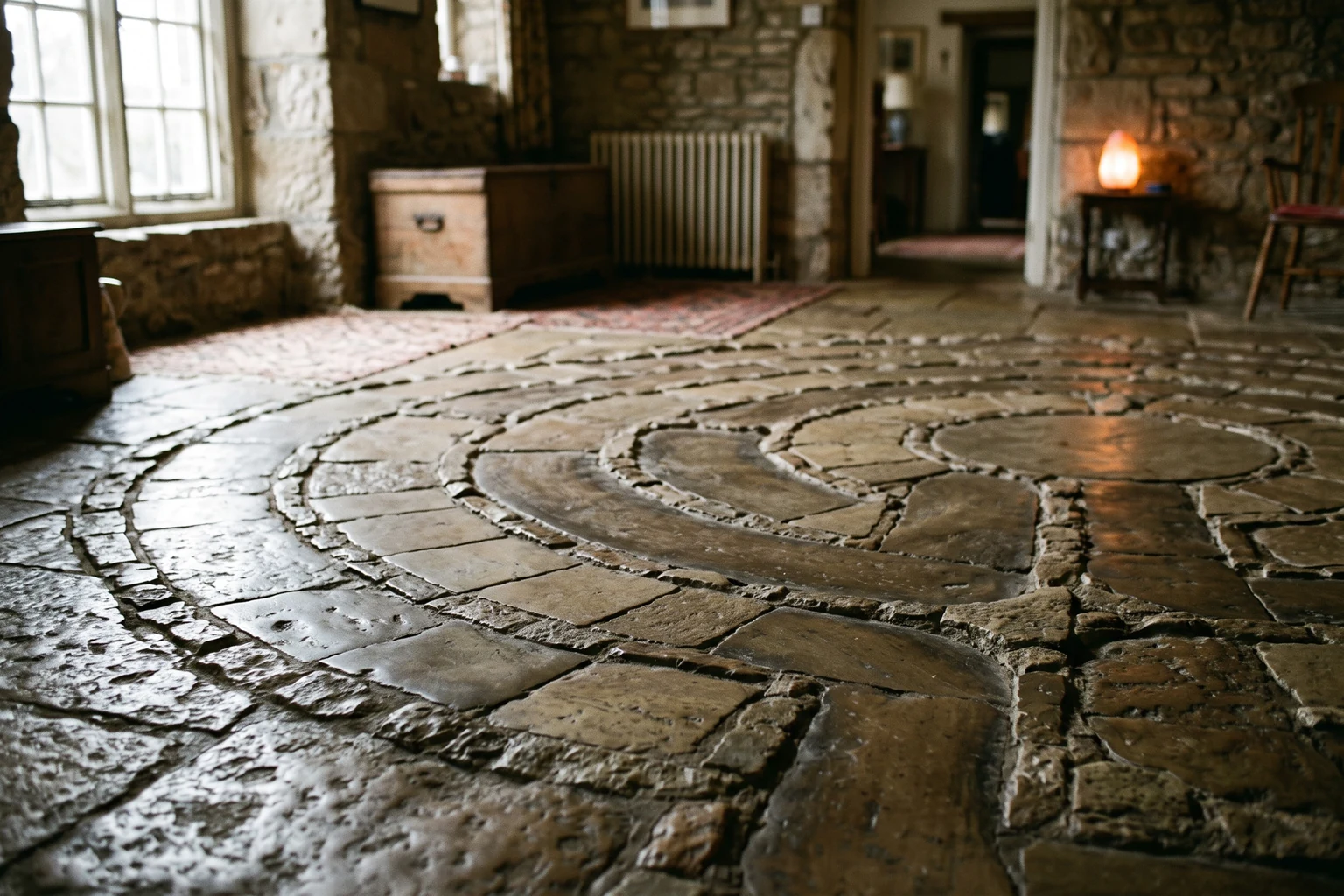
We use the words as though they meant the same thing, but they are near opposites, and the difference is worth knowing. A maze is designed to confuse you. It branches. It offers choices, most of them wrong — turnings that double back, paths that dead-end against a hedge, junctions where you must guess, and guess again, and lose your way, and retrace, and curse. A maze is a puzzle, an adversary, a thing built to defeat you for the sport of it, and its whole pleasure is the bafflement, the being lost, the eventual hard-won solving. You beat a maze. It tries to beat you first.
A labyrinth is something else entirely, though it looks, on a plan, almost the same — a coil of winding path folded back on itself many times over. But a labyrinth has no branches and no choices and no dead ends. There is one path. It winds and turns and doubles and seems to carry you away from the centre just when you think you are near it, but it never divides, never asks you to choose, never lets you make a wrong turn, because there are no wrong turns to make. You cannot get lost in a labyrinth. You can only walk it. The single path leads, by its long patient windings, unfailingly to the centre, and then out again by the way you came. There is nothing to solve. There is only the walking.
And so they are used for opposite things. The maze is entertainment, a garden amusement, a test of wits. The labyrinth is old and grave — laid into the floors of cathedrals, cut into turf on hilltops, walked slowly, often in prayer, as a kind of pilgrimage made small enough to fit inside a building. You walk the medieval labyrinth at Chartres on your knees, or slowly on your feet, and the walking is a journey to a sacred centre and back, a thing done with the body to still and focus the mind, the long enforced meandering of the path becoming a discipline, a way of arriving somewhere by refusing to hurry.
The distinction has stayed with me as more than a matter of definitions, because the two are such perfect images of two ways of meeting the world. The maze is the world as problem — a thing full of choices and wrong turns, to be figured out, solved, beaten, got through by cleverness, with the constant anxiety of being lost and the constant demand to decide. The labyrinth is the world as path — a thing with one way through it, winding and slow and often seeming to lead away from where you want to be, but asking of you not cleverness but only trust: that if you keep walking the single given path, without grasping for shortcuts, without the illusion that you must choose your way, it will bring you where it means to.
We are, mostly, maze people now. We treat everything as a puzzle to be solved, a set of options to be optimised among, a problem whose solution is a matter of enough intelligence applied. And there is a great deal that is genuinely a maze and rewards being treated as one. But not everything is. Some things — a grief, a marriage, a faith, a life — are labyrinths, not mazes; they have one path, which winds, and doubles, and carries you away from the centre just when you thought you were close, and which cannot be shortcut or solved or outwitted, but only walked, patiently, in trust that the winding is not a mistake and the long way is the only way there is. The maze wants you to be clever. The labyrinth only wants you to keep walking. And to know which one you are standing in is, I think, most of the wisdom there is.
Word, when there is word.