Essay XXIX
A Clock for Ten Thousand Years
A clock being built inside a Texas mountain to keep time for ten thousand years, and what it asks of a species that thinks in quarters.
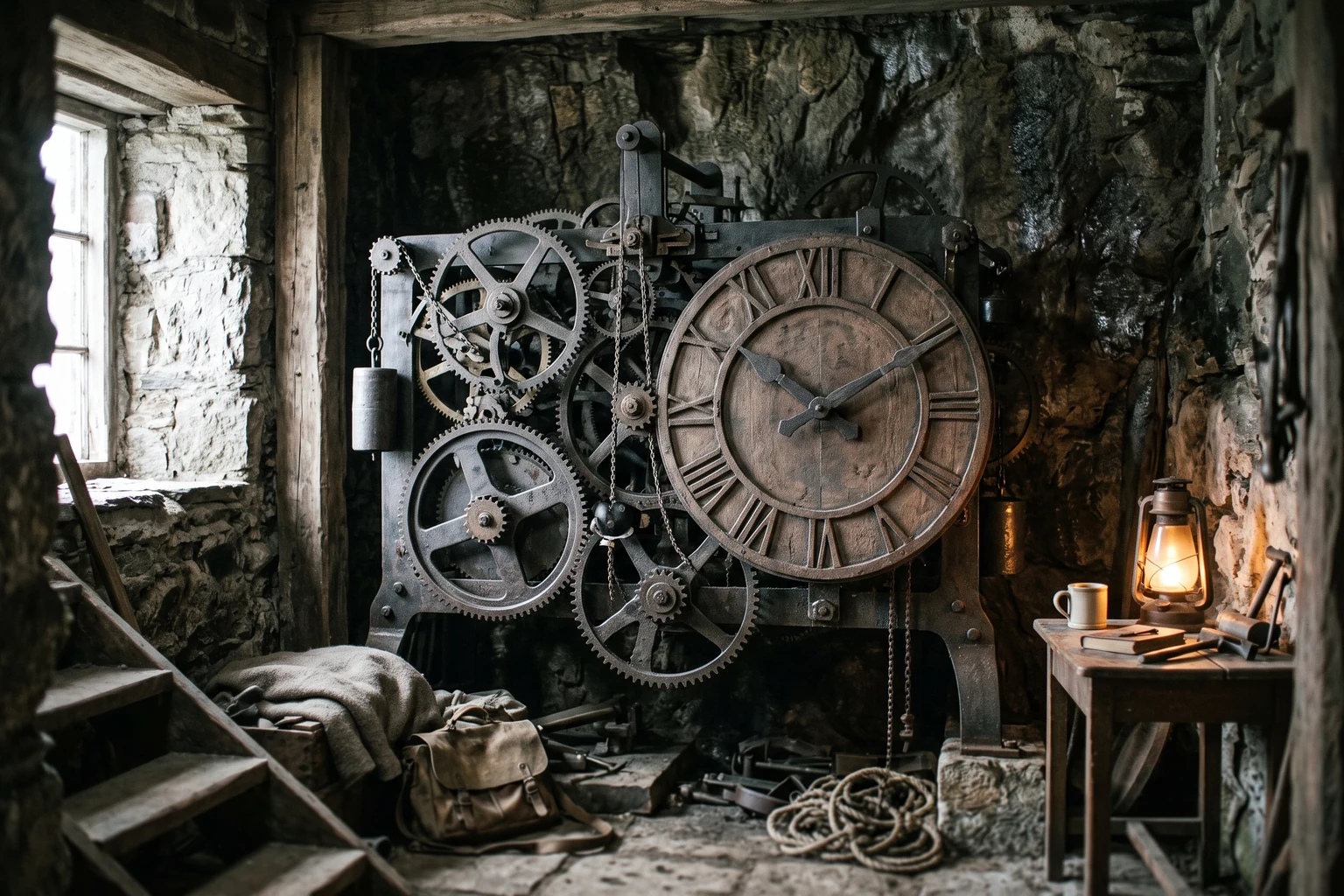
Inside a mountain in west Texas, people are building a clock. Not a large wristwatch — a monument, hundreds of feet tall, of stone and titanium and specially chosen alloys, driven by the daily change in temperature between the mountain’s warm surface and its cool interior, engineered to keep time for ten thousand years. It ticks once a year. A century hand advances once every hundred years. A cuckoo of sorts marks the millennia. It is designed to run, unattended, longer than the whole of recorded history has so far lasted, and to still be telling the right time when everyone alive today, and their language, and their nations, are as remote to the future as the first cities are to us.
It is, on the face of it, an absurd thing to build. It serves no need. Nobody requires a clock that keeps ten-thousand-year time; we have atomic clocks accurate past all human use already. It will cost a fortune and most of the people who fund and build it will never see it finished, will be dead long before its first century hand has moved even once. Every practical instinct we have — cost, benefit, return, use — recoils from it. And that recoil is precisely the point. The clock is built against those instincts. It is patience made into an object, a deliberate rebuke to the tempo of the world that made it.
Because we have become a people who cannot think past the next quarter, the next election, the next release, the next notification. Our whole apparatus is tuned to the short term — to speed, to immediacy, to the return that comes this year rather than the one that comes in a century. We discount the future so steeply that anything more than a decade out barely registers as real. And into that frenzy of the near, someone proposes to build a clock that keeps time for ten thousand years, that asks whoever stands before it to feel, physically, the length of the future — to stand in the presence of a machine that will still be running when the present moment is unimaginably ancient, and to be enlarged, or unsettled, by the scale of it.
I love it as an act of protest more than as an engineering feat, though the engineering is the protest’s whole substance. To build something to last ten thousand years, you must think in ten-thousand-year terms about every part — what alloy will not corrode across a hundred centuries, what mechanism needs no oil, no expert, no spare part, because there will be no supply chain, no maintainer, no company still in existence to service it. You are forced, by the ambition itself, out of your own time and into a vastly longer one, forced to imagine the far future as a real place with real people who will look upon your work. That imaginative stretch — that being made to care about a person ten thousand years off whom you will never meet — is the thing the clock exists to produce.
Whether it will run that long, no one can know; ten thousand years is a promise no one will be present to see kept or broken. But the building of it does its work now, in us, in the stretching of the mind it demands. It stands against the tyranny of the immediate simply by existing, by being a thing made slowly, at great cost, for a benefit no living person will collect — a clock that ticks once a year in the dark of a mountain, keeping a patience we have almost entirely forgotten, on behalf of a future we can barely bring ourselves to believe in.
Word, when there is word.