Essay XII
The Path the Feet Chose
The straight path the planners drew, and the bald line worn across the grass where the feet, day after day, chose otherwise.
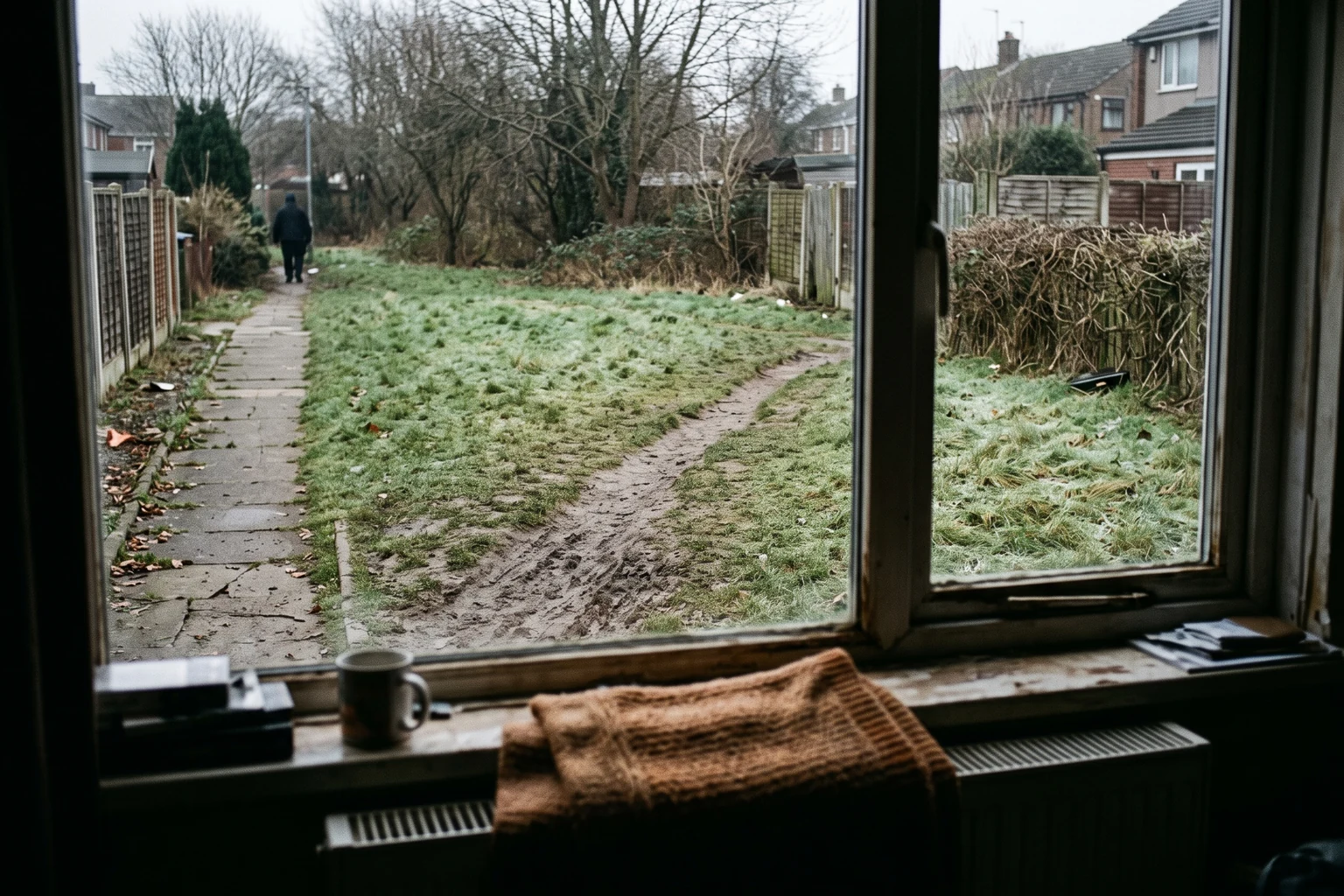
The planners drew the paths in straight clean lines, at right angles, the way paths look good on a drawing. And then people walked. And where the drawn path went the long way round a corner of grass, the walkers cut across it, one after another, day after day, until the grass gave up — worn thin, then bald, then a bare ribbon of trodden earth running diagonally across the green, exactly where nobody was meant to go and everybody went. A desire path, they call it, and it is one of the most honest things in the built world.
You see them everywhere once you start looking. The shortcut across the park where two tarmac paths meet at a stupid angle and the feet have cut the corner. The worn line through the verge beside a bus stop, where the official crossing is forty yards up and no one has forty yards to spare. The track up the bank where a fence has a gap. Each one is a small mutiny, unorganised, unsigned, carried out by thousands of people who never met and never agreed on anything except, with their feet, that the way they were given was not the way they wanted to go.
What moves me about them is that they are a vote no one meant to cast. Nobody sets out to make a desire path. Nobody stands at the edge of the grass and decides to register a protest against the landscape architect. They just want to get to the bus, or the shop, or home, and they take the line that the body knows is shorter, and they think nothing of it — and yet the sum of all those thoughtless individual crossings is a mark on the earth, a permanent record of where people actually wanted to walk, written by the walking itself. The official map says one thing. The ground, worn bare, says another, and the ground is telling the truth.
There is a lesson in it for anyone who plans anything, and the good planners have learned it: lay the paving after the desire paths appear, not before. Let people cross the space however they cross it, watch where the grass wears thin, and put the path there — where the feet have already voted — rather than imposing a geometry from above and then wondering why everyone ignores it. Some universities are said to have done exactly this, leaving the new lawns bare for a year, then paving the tracks the students wore, so that the paths match the walking instead of fighting it. It is a rare humility, that: to let the used thing teach you, rather than insisting the drawn thing win.
Because the drawn thing so rarely wins, in the end. You can put up a low fence, and the path will bend around it and re-form on the far side. You can post a sign, and the sign will stand in a field of trodden mud, ignored, a small monument to the gap between what was intended and what is done. The desire path has a patience and an inevitability that no amount of official disapproval overcomes, because it is not made by anyone in particular and so cannot be argued with — it is made by everyone, a little at a time, by the plain fact of bodies going where bodies go.
I love them as the truest sort of map, the kind drawn without meaning to. Somewhere under the neat paved world is the world people actually move through, and every so often it breaks the surface — a bare diagonal line across a green, worn by a hundred thousand footfalls, insisting quietly that this, and not the right angle the plan preferred, is the way home.
Word, when there is word.