Essay XVI
Coaxing the Embers
A fire that looks dead by morning, and the deep red coal found under the ash—not a spark to be struck but a warmth to be coaxed back.
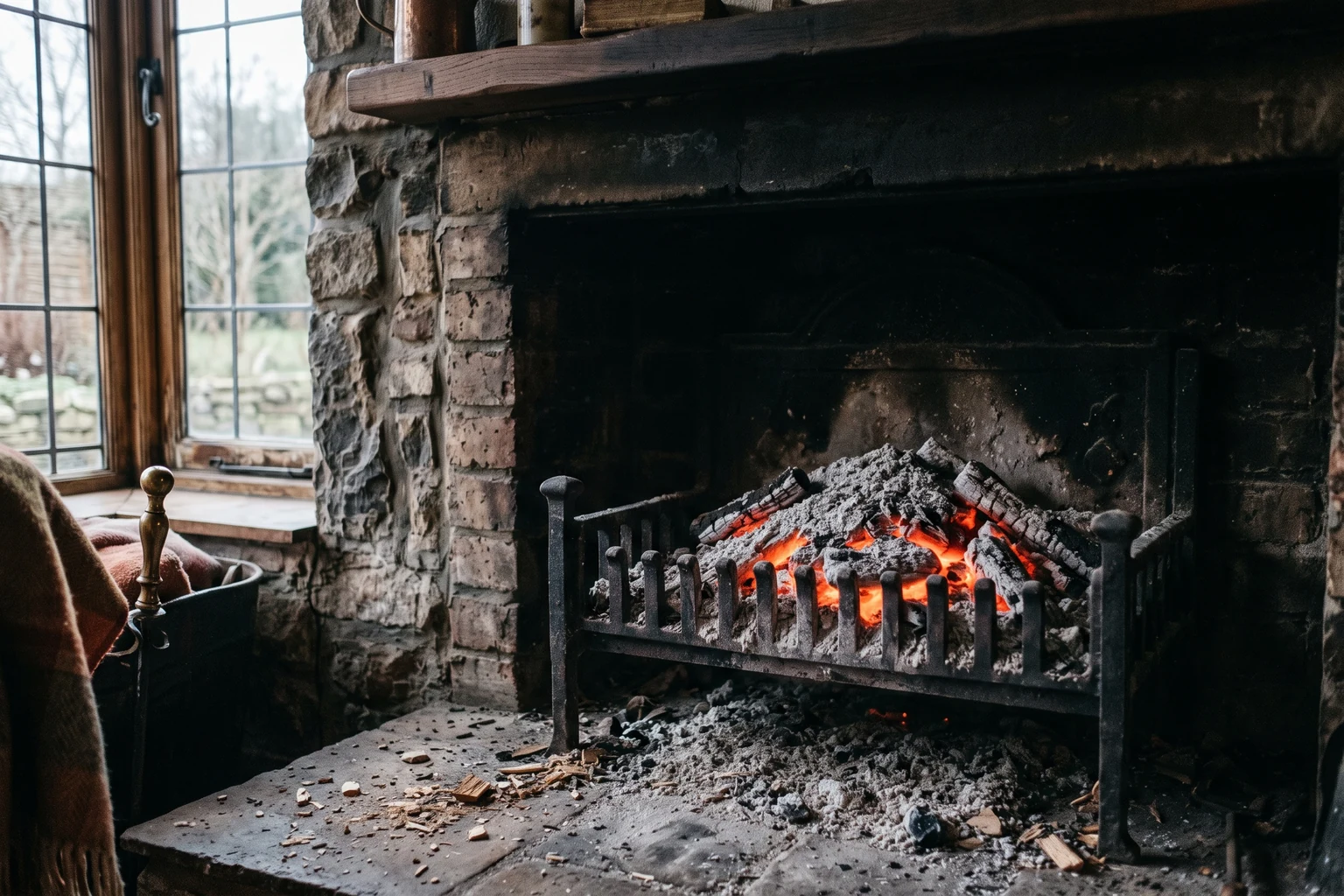
In the morning the fire looks dead. Grey ash, a drift of it, soft and cold-looking, with the black bones of last night’s logs half-buried and gone to charcoal. Nothing moves. No smoke, no glow, no heat you can feel from the front of the hearth. You’d swear it was out. But you kneel down anyway and take the poker and part the ash gently, the way you’d part hair to look at a scalp, and there, down at the bottom, under the grey blanket, is the orange.
Not much of it. A few coals still holding a deep, sullen, red-gold heat, dimmed almost to nothing under their coat of ash, waiting. You feel it before you see it — a breath of warmth rising up off the raked-open bed, the stored fire of the night before that never quite went out. It’s the whole difference between morning and a cold start: not a spark to be struck but an ember to be found, and found, it changes everything.
You lay the small stuff on. A twist of paper, a few slivers of dry kindling, a handful of last week’s shavings — light things, quick to catch, laid close over the glow but not smothering it, because a fire this low can be killed by kindness, buried under too much too soon. You build a little tent of thin wood over the red coals and leave it room to breathe.
Then you get down low, cheek almost to the hearthstone, and you blow.
Not hard. That’s the first thing the fire teaches you and keeps teaching you: a hard blast scatters the ash and blows the heat away and gets you a face full of grey. What the ember wants is a long, low, steady breath, aimed right at the heart of the glow, patient as anything. So you blow — slow, controlled, feeling the air leave you in a thin stream — and you watch.
And the ember answers. Under your breath the dull red brightens, blooms, goes from sullen crimson to a fierce hot orange, then almost white at its centre where the air is feeding it, the colour running out along the coal like something waking. You can see the heat moving. You run out of breath and stop, and the glow sinks back a little, dimming as the air leaves it, and a thread of smoke lifts off the kindling — the wood getting hot now, giving up its first grey smoke, right on the edge of catching. You breathe in, and blow again.
This is the whole of it: breathe, and blow, and watch it brighten, and pause, and breathe, and blow again. You can’t command it. You can’t decide it’s time and make the flame appear. You can only keep offering it air, gently, and keep it fed with small dry things, and wait for the fire to make up its own mind. Sometimes it takes ten breaths. Sometimes the smoke thickens and thickens and gives you nothing and you have to add a scrap more kindling and start again, closer, lower, more patient.
And then — always sudden, always faster than you expect — it catches. A thread of the smoke ignites with a small soft whoomf, and a real flame stands up out of the kindling, yellow and alive and climbing, and takes hold of the next piece, and the next. The glow becomes fire. The heat you were coaxing out a breath at a time is all at once just there, radiant, generous, climbing into the wood, and you sit back on your heels with your face hot and your eyes stinging a little from the smoke and watch the thing you called back out of the ash begin to burn on its own.
You didn’t make it. It was there all night, banked and hidden, holding onto a heat you couldn’t see. You only found it, and fed it, and gave it your breath until it remembered how to be a fire. Then you build it up with the bigger wood, and stand, and your knees complain, and the room begins, slowly, to warm.
Word, when there is word.