Essay XIX
Waiting for Glue to Dry
Two splintered chair legs pressed together, the label saying twelve hours and the hand saying now—the long discipline of letting a bond set.
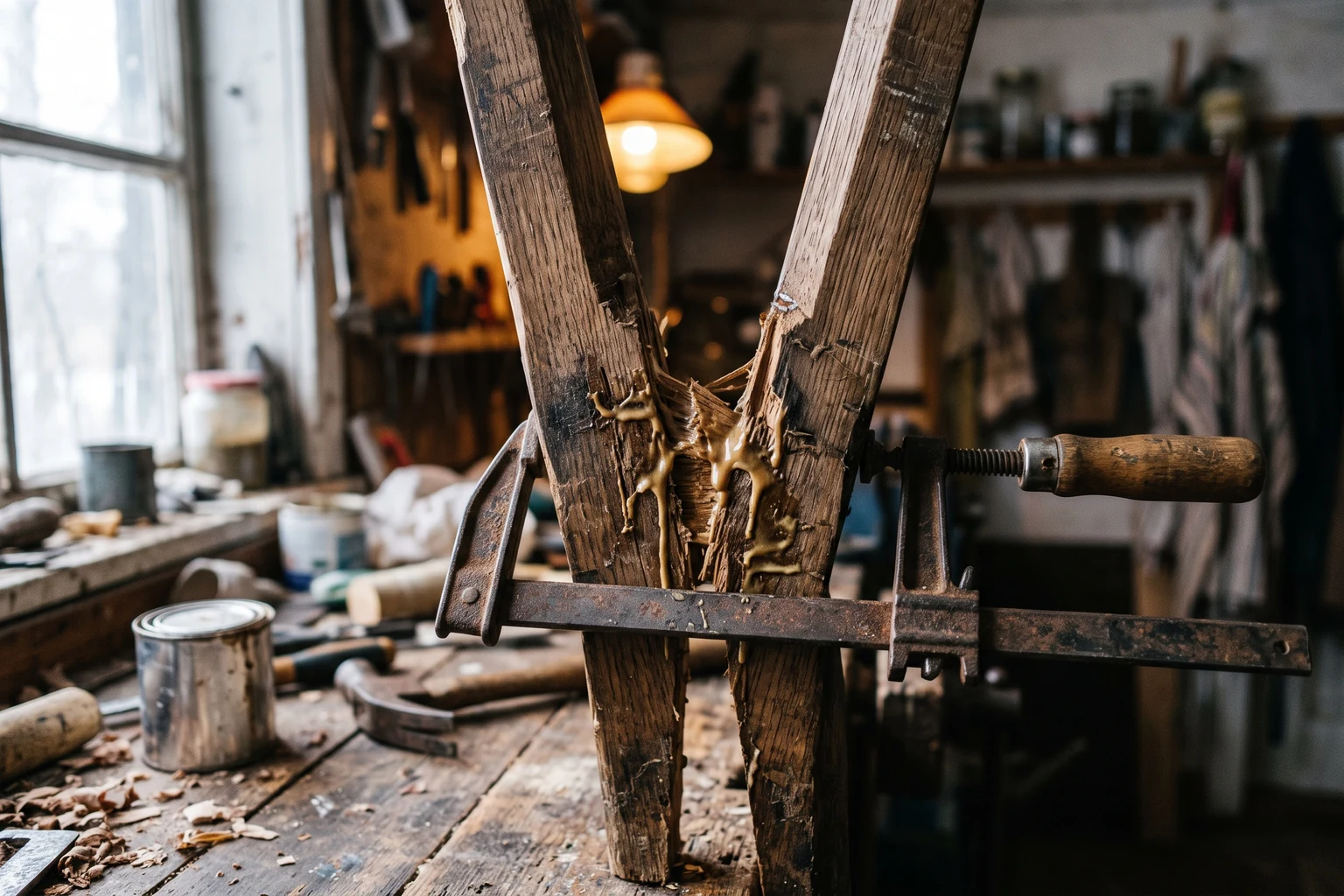
The smell of wood glue—faint, sweet, a little sour. If you’ve ever pressed two splintered chair legs together, hands sticky with the stuff, you know it. The label says “clamp for twelve hours.” Your body says “check it now.” This gap between instruction and impulse—this is where something happens.
Modern life has engineered itself around the elimination of such intervals. Every pause is an inefficiency to be optimized away. Five-minute epoxy. Instant adhesives that promise bonds in seconds. Next-day delivery. Fast-charging ports. We’ve built a world that treats stillness as failure. But the old glues, the ones you find in battered tins at the back of a cupboard, still insist on time. They don’t care about your schedule. They’re older than your hurry.
The thing is, though, glue doesn’t just need time. It needs you to do nothing. Not quite nothing—you align the pieces, press them together, clamp them just so. But then your hands become useless. The bond forms in darkness and pressure, out of sight. Nothing to watch. Nothing to do but wait.
This is not the same as waiting for a kettle to boil or a package to arrive. Those are transactional waits—you’re counting minutes until you can move on, the mind already leaping ahead. But waiting with glue is different. Companionable. You share the interval. The repair sits there, clamped and silent, and you bear witness to its healing.
My grandfather kept a shelf in his shed for mended things. A handle from a teapot. A rung from a ladder. A toy missing a wheel. The shelf was a shrine to unfinished business. Sometimes he’d nod at it, as if acknowledging a congregation. The waiting was part of the repair. You waited with the thing, not just for it.
Your nervous system doesn’t appreciate the distinction at first. Fingers itch to test the bond. Your breath might shorten—that shallow agitation that whispers about other things, more important things, faster things. The body, trained by instant updates and frantic multitasking, wants to move, to check, to finish. But the clamp says no. The glue says not yet. The world, for once, resists your will.
Most repairs fail not because the glue was wrong, but because someone couldn’t resist the urge to peek. A fingerprint in the soft surface. A joint that creaks open under pressure. Impatience made visible. The glue remembers. It will show you, eventually, that some things cannot be bullied, cannot be rushed, cannot be optimized. The strongest bonds form in stillness, under gentle, unrelenting pressure, given time.
There’s a humility in this. The glue does its work in secret. You can’t see the molecules cross-linking, the slow alchemy of stickiness turning to strength. You have to trust a process you cannot accelerate. All agency surrendered to chemistry and time. This is an affront to the modern ego, which believes all outcomes result from direct, willful action. Here, your job is to not act. To not check. To not poke.
The modern adhesives offer speed, but at a cost. Five-minute epoxy gives you five minutes of panic—align now, clamp now, don’t breathe wrong, don’t slip. The interval is still there, only now it’s tight, anxious, pressurized. The faster the glue, the more you feel the pressure in your hands, your jaw, your breath. This isn’t patience; it’s pressurized suspense.
But sometimes, if you let the process be slow, something shifts. The initial agitation, that cortisol spike of frustration, might give way to something else. A quieter hum. You notice the dust motes in lamplight. The subtle creak of the old house. Your own breathing. This isn’t self-improvement. More like recalibration. The body, accustomed to constant input, constant demand, given a moment of unexpected grace.
The waiting becomes something like prayer—if prayer were simply sitting, aware, letting the world turn without you. The glue is a mediator. It joins two things without becoming either. It acknowledges the crack rather than erasing it. When you throw something away, the crack is forgotten. When you glue it, the crack becomes the most important part of the object’s history. You’re not wishing the damage away; you’re making it the foundation of its new strength.
The waiting period, then, is time spent in contemplation of that fracture, accepting it as part of the object’s story.
When the time comes—when you loosen the clamp and test the joint—there’s a small moment of judgment. The bond might hold. Might not. Your body leans in, all attention. There’s a creak. Is it the wood, or the bond failing? This is the final lesson of the wait: that trust is a physical act. You must risk the break to confirm the repair.
When it holds, the satisfaction is quiet. Not triumph, but gratitude. The chair is a chair again. The cup holds tea. You return these things to their lives, and yours. The object is mended, yes. But you, too, have been worked on. Your capacity for stillness stretched, your nervous system gently re-tuned to the unhurried rhythms of the physical world.
There’s a dark humour to it, though. You spend hours waiting for the glue to dry, only to find, sometimes, that it hasn’t worked. The break opens again. The world is not obliged to reward your patience. But the act of waiting with a broken thing, of giving it your presence and your hope, is its own kind of repair.
You are not here to transcend the world. You are here to learn how to carry it. And sometimes, carrying it means staying with it, cracked and unfinished, through its slow mending.
Might be that’s enough.
MEDIUM (Instagram/LinkedIn: 150-250 words)
The smell of wood glue—faint, sweet, a little sour. The label says “clamp for twelve hours.” Your body says “check it now.”
Modern life has eliminated these intervals. Five-minute epoxy. Instant adhesives. We’ve built a world that treats stillness as failure. But the old glues still insist on time. They don’t care about your schedule.
My grandfather kept a shelf for mended things. A teapot handle. A ladder rung. The shelf was a shrine to unfinished business. Sometimes he’d nod at it, acknowledging a congregation. The waiting was part of the repair. You waited with the thing, not just for it.
Your nervous system rebels at first. Fingers itch to test the bond. But the clamp says no. The glue says not yet. Most repairs fail not because the glue was wrong, but because someone couldn’t resist. A fingerprint in the soft surface. Impatience made visible.
Sometimes, if you let the process be slow, something shifts. You notice dust motes in lamplight. The creak of the old house. The waiting becomes something like prayer—if prayer were simply sitting, aware, letting the world turn without you.
When you finally test the joint, there’s a moment of judgment. The bond might hold. Might not. When it does, the satisfaction is quiet. Not triumph, but gratitude.
The act of waiting with a broken thing is its own kind of repair.
SHORT (Twitter/X: 150-240 characters)
Wood glue takes twelve hours to dry. Your body says check it now. Most repairs fail not because the glue was wrong, but because someone couldn’t resist. A fingerprint in the soft surface. Impatience made visible.
Word, when there is word.