Essay XXXIII
Oiling the Board
A cutting board gone grey and thirsty, and the oil worked into it that darkens the wood back to warmth—a small feeding of a thing that serves you.
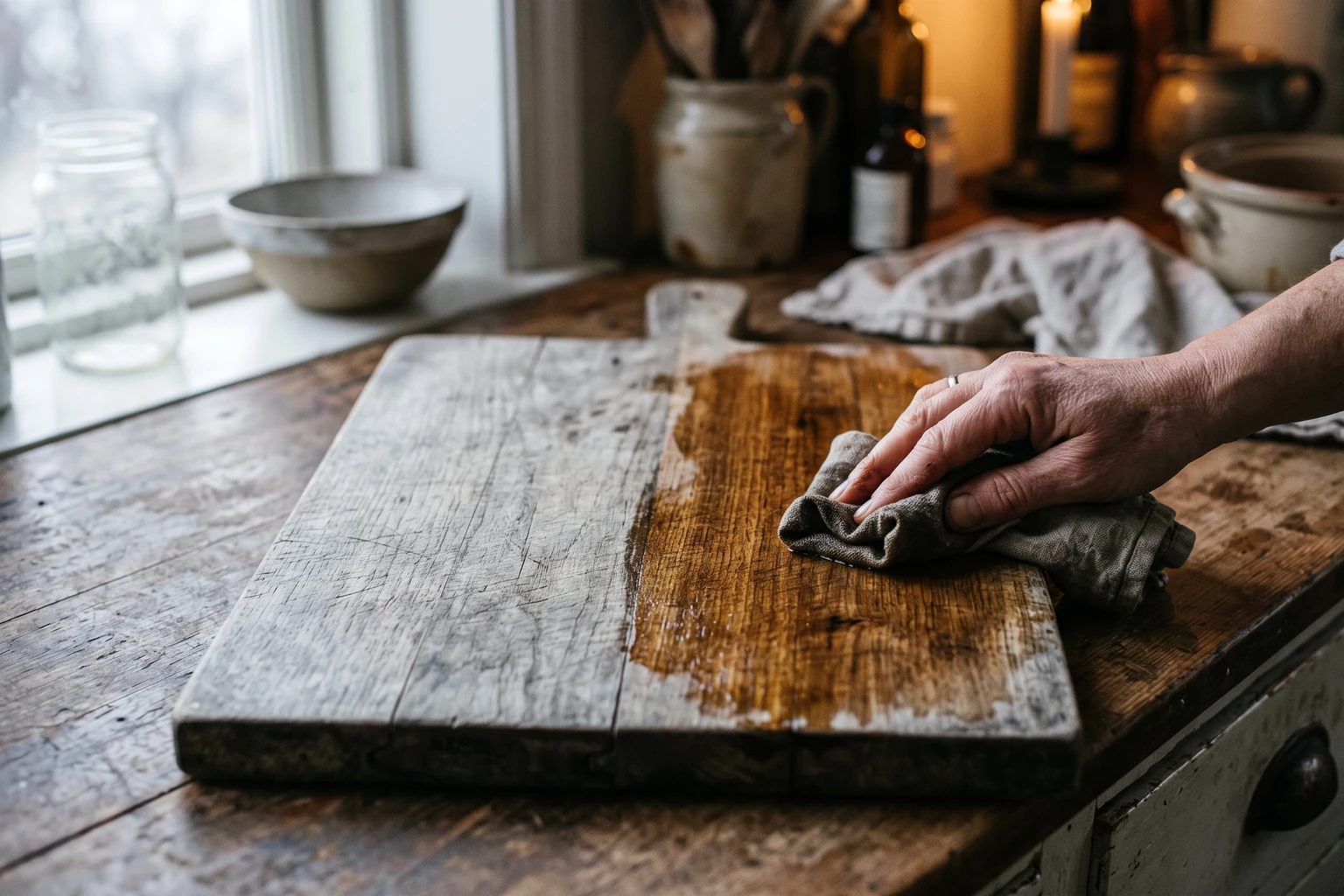
The board has gone grey. You notice it the way you notice a thing you use every day — all at once, having not seen it for months. The wood that was warm and honey-coloured when it was new has faded and dried and dulled, the surface gone pale and slightly furred, thirsty-looking, a fine roughness to it under the fingers where the grain has lifted from a hundred washings. Scored all over with the pale tracks of the knife. Dry as a bone in a field.
You warm the oil a little, or you don’t, and you pour a small pool of it into the middle of the board, where it sits for a moment beading on the dry surface, and then begins, slowly, to go. You take a cloth, or the flat of your hand, and you start to work it in — round and round, with the grain and against it, pushing the oil across the whole face of the board and into every scored line and up over the ends.
And the wood drinks. That’s the thing to watch, the thing worth doing this for: the oil doesn’t sit, it sinks, drawn down into the dry grain as fast as you can spread it, the pale grey surface going dark and rich under your hand as it soaks in. The colour comes back like a held breath let out — the honey and amber and warm brown that were there all along under the grey, surfacing again where the oil feeds them, the figure of the grain suddenly deepening, the flecks and rays and the tight lines of the growth rings standing up clear and dimensional where a second ago there was only flat pale dryness.
You keep going, rubbing it in, and the board keeps taking it, and the ends take the most because end grain is thirstiest, the cut fibres open like a bundle of straws, drinking the oil down into the depth of the wood. Your hand slides easier as the surface saturates. The knife-scores fill and soften and half-vanish. The roughness lies down. Where the wood was furred and dull it goes smooth and glowing under your palm, warm to look at, warm to touch, alive again in a way that has nothing to do with anything but oil finding its way into dry cells.
Then you leave it. An hour, a night — you set it up on its edge and let the oil work its way in, soaking down past the surface into the body of the board, and when you come back the top is no longer wet but the colour has stayed, deepened, set. If it’s drunk the lot and gone dull again already you give it more, and it takes that too, a board this dry can drink two coats and three, and you feed it until it stops being thirsty, until the oil begins to sit a moment on the surface before sinking, which is how the wood tells you it’s had enough.
The last thing is to wipe off what it wouldn’t take — the excess standing on the surface, buffed away with a dry cloth until the board is smooth and satiny and not a bit tacky, glowing but dry to the hand. And there it is: the grey gone, the grain risen and rich, the whole board looking fed and easy and years younger than it did this morning, ready to go back under the knife.
It won’t last. That’s understood going in. Every wash draws a little of the oil back out, every wet onion and scrubbed pot and rinse under the tap leaches it, and the grey creeps back over weeks and months until one day you notice again that the board has gone pale and dry and furred, thirsty, needing. And you’ll warm the oil, and pour the small pool, and work it in with the flat of your hand, and watch the colour come flooding back — a thing you don’t finish so much as keep doing, feeding the wood what use keeps taking out of it, for as long as you both last.
Word, when there is word.