Essay XXXVII
Priming the Pump
A dry pump that sucks at air and gives nothing until you pour water in to draw water out—the old paradox of priming.
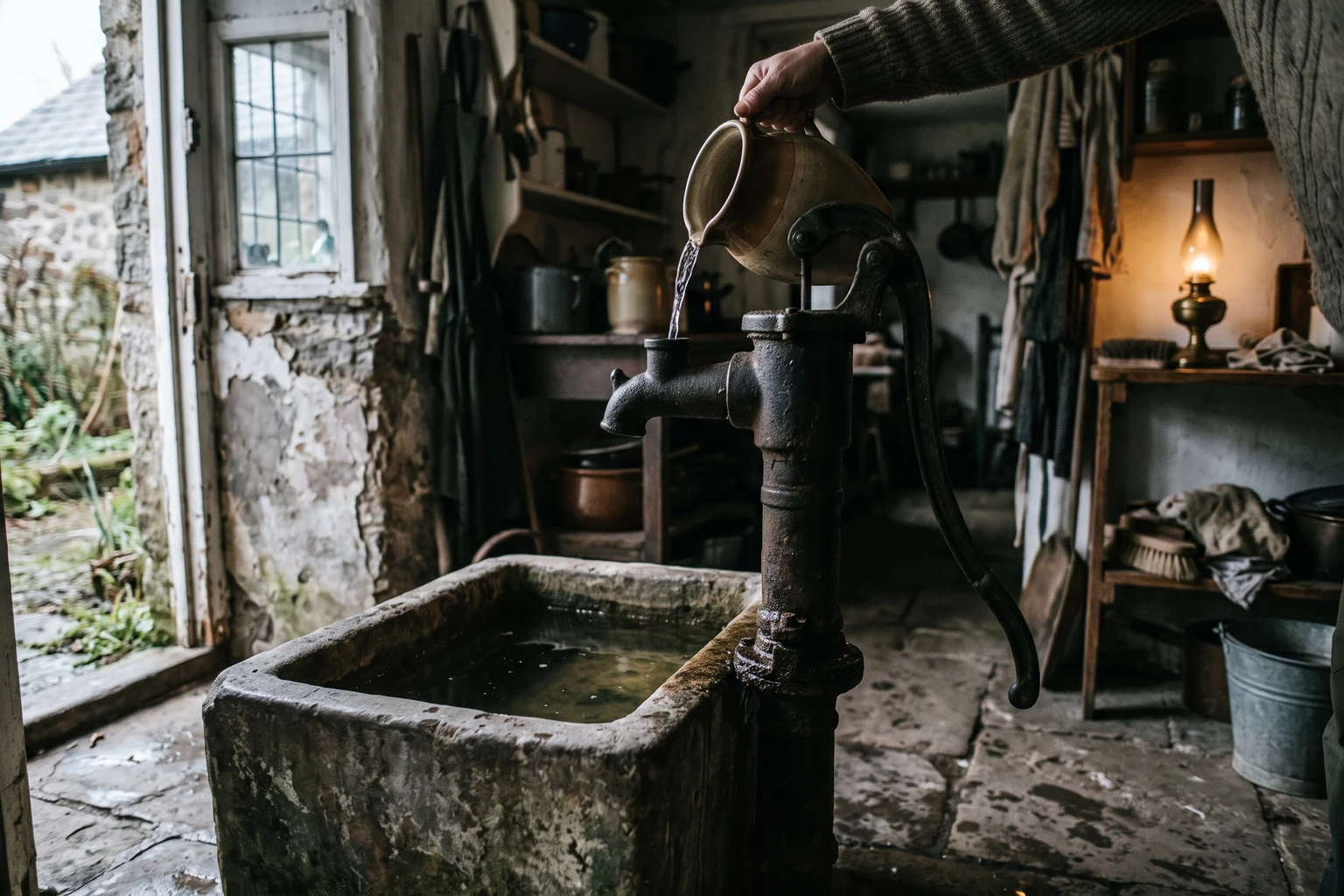
The handle is cold and stiff and the first stroke gives you nothing. You lift it and press it down and it moves too easily, a light empty resistance, the piston sucking at air somewhere down in the pipe, and no water comes. That’s how it always begins at a pump that’s stood unused — dry, its throat full of air, the water waiting far down in the dark below and no way up until you’ve done the strange bit of faith the pump demands: you have to pour water in to get water out.
So you take the little you’ve kept back, a jug of it, and you pour it down into the top of the pump, into the mouth around the piston, priming it. It vanishes down the pipe with a gulp. It feels like waste — pouring good water into a dry hole, giving away the only water you’ve got on the promise of more you can’t yet see — and there’s a small act of trust in doing it, the trust that the pump knows a trick your arm alone can’t manage, that the poured water will seal what needs sealing and let the suction take hold.
Then you pump, and now it’s work. The handle’s changed — there’s weight in the stroke now, a real resistance, the poured water having wetted the leather of the piston so it grips the bore and starts to pull a vacuum instead of just wheezing air. You lift and press, lift and press, the whole arm into it, and for a while still nothing, just the resistance building and a deep gurgling and sucking down in the pipe, the sound of water being drawn up against gravity through a column of air, closer with each stroke, or so you tell yourself, because you can’t see it and you have to keep faith with the handle a good while before there’s any proof.
You keep at it. The strokes are heavy now, the resistance full, and the sound down the pipe is thickening, changing — the dry suck giving way to a wetter, heavier, gulping noise, something rising. Your shoulder aches with the pumping. And then the handle loads up all at once, gone suddenly heavy and solid, water’s weight in it now instead of air’s, and on the next downstroke the spout coughs — a spit, a splutter, a gout of air and water together — and then, on the stroke after, it comes.
The water comes. A hard cold gush of it out of the spout, clear and cold and endless-seeming after all that dry labour, splashing into the pail, and the handle now moving heavy and smooth and rewarding, each stroke pulling up its own solid slug of water, the pump primed and drawing and giving back many times over the jug you poured in on faith. The resistance that a minute ago gave nothing now gives water with every push, cold enough to numb your fingers, more than you can catch.
That’s the bargain of the pump, and the body learns it at the handle: you prime before you drink. You give first — pour in the little you have, spend the empty strokes, keep pumping through the stretch where nothing comes and there’s no sign it ever will — and only then, after the giving and the labour and the faith held past the point of reason, does the water break and come and keep coming. Stop too soon, before it’s caught, and the water sinks back down the pipe and the air returns and you’re dry again, back to pouring in your jug and starting over. But hold the faith, keep the arm going through the empty part, and the pump draws up out of the cold dark ground more than you ever put in.
Word, when there is word.